Something quietly shifted in tech hiring over the last two years. Companies that once screened exclusively for degrees are now looking at GitHub profiles before they look at transcripts. That’s not a dismissal of education it’s a signal that the definition of “qualified” is getting a serious upgrade.
The Job Description Has Changed. The Hiring Criteria Hasn’t (Until Now)
For a long time, a Computer Science degree was the most reliable shorthand for technical ability. And it made sense it was hard to verify skill any other way at scale. The degree meant someone had cleared a bar. That was enough.
But the bar itself has shifted. The role of a developer, a data analyst, or a tech product manager in 2026 looks meaningfully different from what it did in 2018. AI tools are embedded in daily workflows. Cross-functional collaboration is non-negotiable. The ability to learn fast and adapt faster matters as much as foundational knowledge.
So hiring teams aren’t abandoning credentials they’re adding new ones.
What’s Actually Changed in the Market
AI tools compressed the learning curve significantly.
Self-directed learners can now reach a functional, employable skill level faster than ever before. This hasn’t made CS knowledge irrelevant strong fundamentals still matter, especially as AI-generated code becomes harder to audit without them. But it has created a larger, more diverse pool of capable candidates.
Bootcamps and alternative paths matured.
Early cohorts had mixed results. But people who went through intensive programs in 2022–2024 now have two or three years of real work experience. The performance data is catching up with the skepticism, and hiring managers who work with them regularly are updating their priors.
Degree requirements are quietly being dropped — even at big companies.
Amazon, Google, IBM, Apple, and many others removed degree requirements from most tech roles years ago. Mid-market tech companies are following. This isn’t idealism it’s a response to a talent market where the best candidates don’t always arrive through traditional pipelines.
The Skills That Are Actually Moving the Needle Right Now
Across all backgrounds — CS degree or not here’s what consistently stands out in hiring:
Genuine AI fluency — not listing tools on a resume, but having actually built a workflow around them. The difference is obvious within one technical conversation.
The ability to communicate across functions — developers who can explain technical tradeoffs to a product team, or a data analyst who can translate findings into business decisions. This is rare and disproportionately valued.
A track record of finishing things — shipped projects, real users, lessons learned. Academic projects count. Personal projects count. What matters is the habit of seeing things through.
Adaptability over specialization — not because depth doesn’t matter, but because the tooling changes so frequently that the capacity to learn has become the core skill.
Where the Degree Still Matters (A Lot)
This conversation gets distorted when people treat it as all-or-nothing, so let’s be direct:
For ML research, systems engineering, cryptography, compiler development, and other deeply technical domains, foundational academic training is genuinely important and hard to replicate outside of a structured program. The theory isn’t decorative.
Even in more general software roles, CS grads often bring something underrated: the ability to reason about why something works, not just that it works. When AI-generated code breaks in production at 2am, that foundational knowledge is the difference between a quick fix and a three-hour debugging spiral.
The degree isn’t the liability. The assumption that the degree alone is sufficient that’s where people get stuck.
What This Means for Hiring Teams
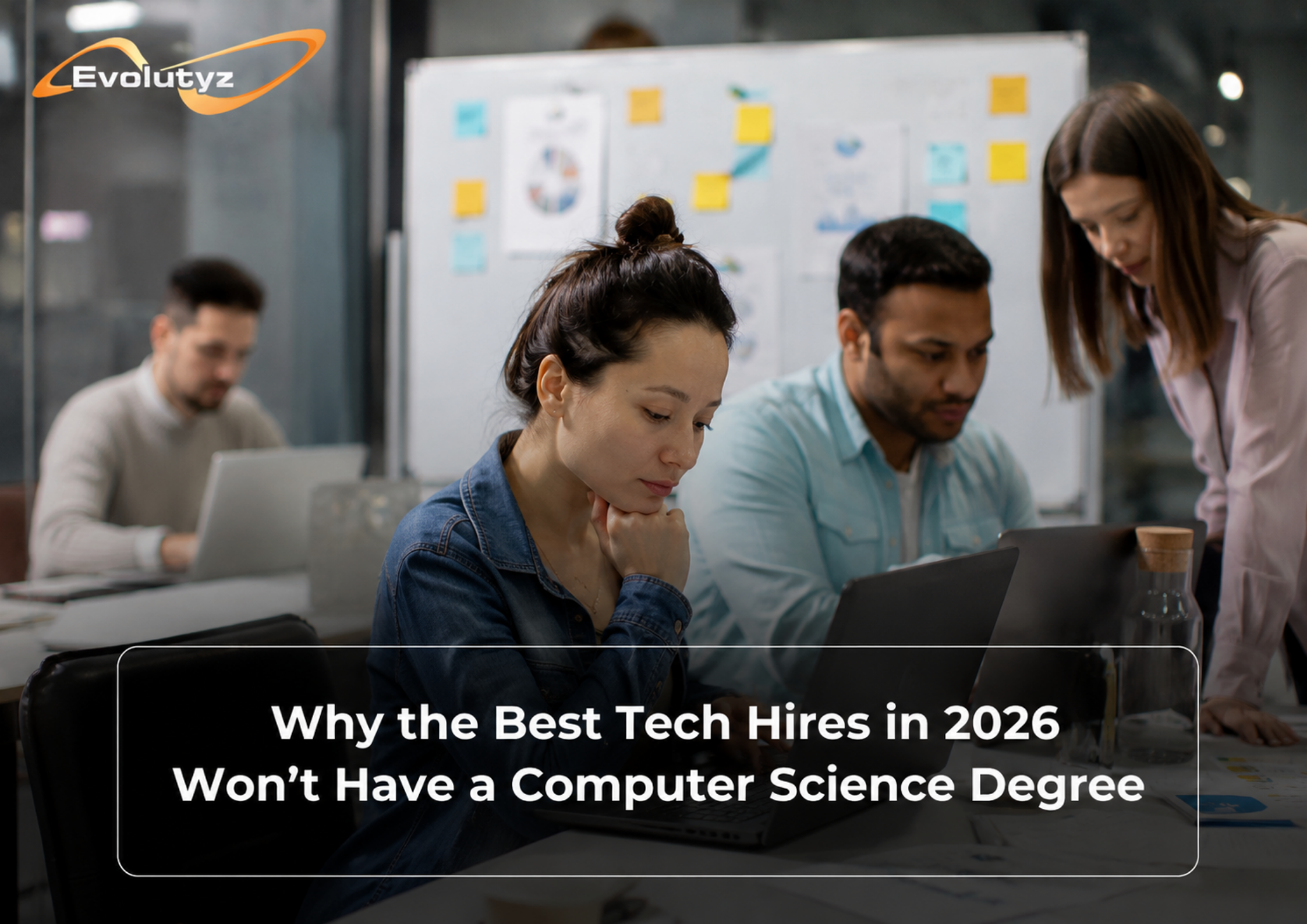
The most effective hiring processes in 2026 evaluate capability directly rather than using credentials as a proxy. That means practical assessments, portfolio reviews, and conversations designed to surface how someone thinks not just what they’ve studied.
A CS grad and a self-taught developer can both be exceptional hires. They bring different strengths. The goal is building teams with both people who can go deep on fundamentals and people who are fast, adaptive, and plugged into how the industry is actually moving.