Every company on LinkedIn is suddenly “exploring AI agents.” Scroll for five minutes and you’ll find a dozen posts about the future of autonomous work, agentic workflows, and AI coworkers. Scratch the surface of most of these companies, though, and you’ll find the same thing: a slightly smarter chatbot wearing a fancier job title.
That’s not an agent. That’s autocomplete with better PR.
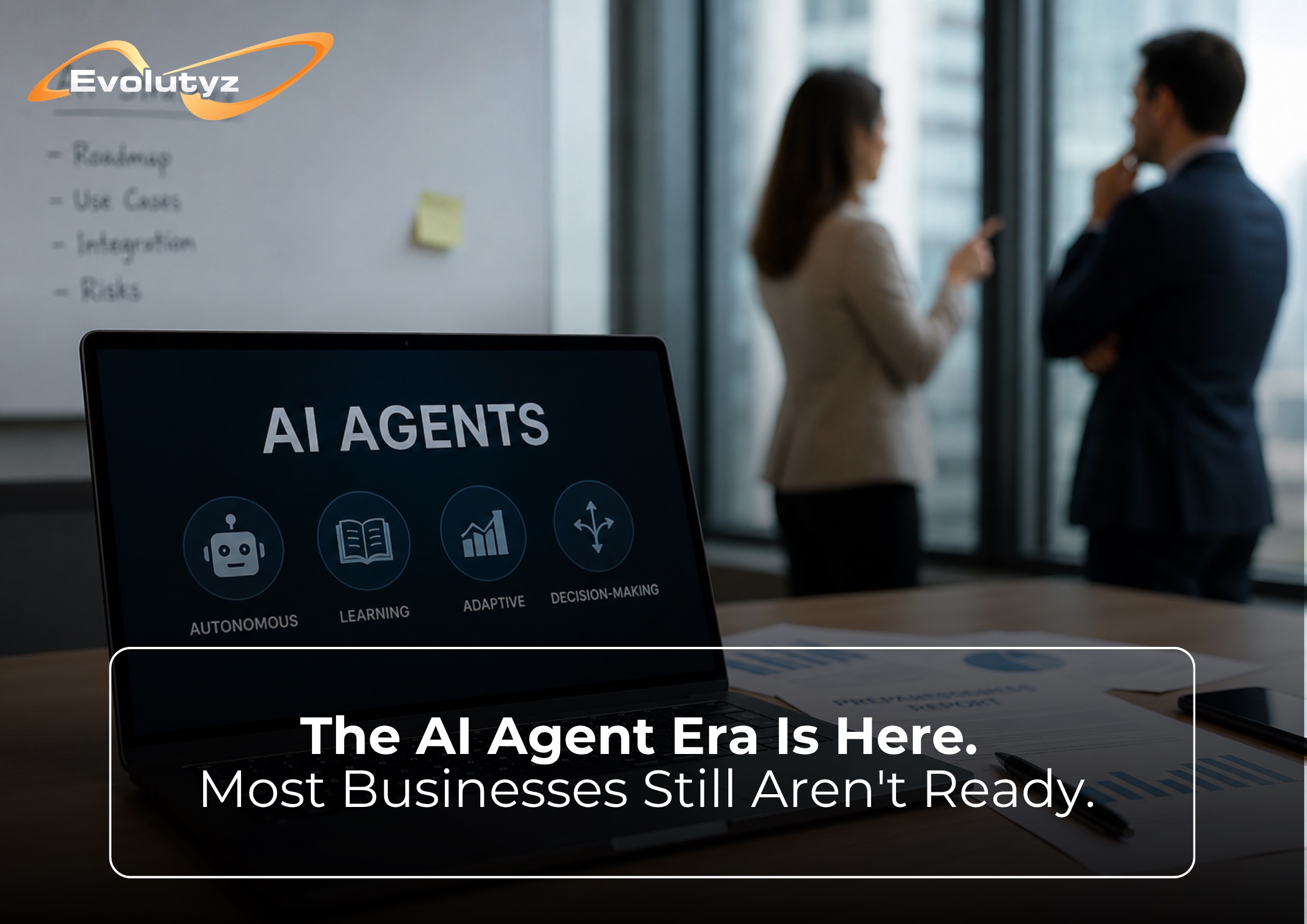
Here’s the uncomfortable truth nobody wants to put in their thought leadership post: an AI agent isn’t a tool you bolt onto an existing workflow. It’s closer to a coworker who never sleeps, never asks for a raise, and can execute multi-step tasks without a human clicking “approve” at every single stage. That is a fundamentally different animal than the AI most businesses have been dabbling with since 2023, and treating it like the same thing is exactly why so many “AI initiatives” quietly stall out after the pilot phase.
The gap nobody’s talking about
Every company wants to sound AI-first. Far fewer have actually rebuilt even one process around what agents can genuinely do differently: reason across multiple steps, pull data from several systems at once, make a judgment call, and act on it, all without a human babysitting each individual move.
That’s not a prompt engineering problem. It’s an infrastructure problem, and it’s a much bigger one than most leadership teams have budgeted for.
Most businesses are trying to drop agents into workflows that were designed for humans: rigid approval chains, siloed departments, systems that don’t talk to each other, spreadsheets living in someone’s inbox instead of a shared source of truth. An agent placed into that environment doesn’t look intelligent. It looks broken, not because the technology failed, but because the environment was never built for something capable of acting on its own.
Why “we’re using ChatGPT” isn’t the same thing
Using AI to draft an email or summarize a document is automation wearing a nicer interface. Useful, sure. Transformative, not really.
An agent that decides which customer needs a follow-up, checks their order history, drafts a personalized message, sends it, and flags the one exception that actually needs a human’s judgment, that’s a different category of work entirely. It requires trust. It requires permissions and guardrails built in advance. It requires a business that’s willing to redesign a process from the ground up instead of just automating the old, clunky version of it.
Most businesses haven’t done that redesign. They’ve layered AI on top of the existing org chart and called it innovation, instead of asking the harder question: what should the org chart even look like once software can actually do things, not just suggest things?
The readiness problem is cultural, not technical
Here’s the part that surprises people: the technology is mostly there already. What’s missing is the willingness to hand over a real decision, even a small, low-stakes one, and let an agent own it from start to finish without a human hovering over every step.
That kind of trust doesn’t build itself overnight, and honestly, most companies haven’t earned it yet, because it starts with their own data. You cannot hand an agent access to inconsistent, outdated, half-updated systems and expect it to perform like magic. Garbage in, confidently wrong output out, and now it’s happening at machine speed instead of human speed.
There’s also an uncomfortable internal conversation most companies are avoiding: if an agent can genuinely own a task end to end, what does that mean for the person who used to own it? Businesses that dodge this question instead of answering it honestly end up with employees who quietly sabotage adoption, because nobody explained what’s actually changing for them.
So what does “ready” actually look like?
It’s not a company running twelve scattered AI pilots across five departments with no shared strategy. It’s a company that picked one process, cleaned up the data sitting behind it, clearly defined the exact point where a human needs to step in, and let an agent run the rest of it. Small scope. Real ownership. Honest measurement of what it got right, what it got wrong, and what needed a human to catch it.
That’s slower. It’s less exciting than a keynote demo. It also happens to be the only approach that actually works past the pilot stage.
The businesses that win this next phase
They won’t be the ones with the flashiest AI demo at the next industry conference. They’ll be the ones who did the unglamorous work first: fixing the data, clarifying the process, deciding honestly what they’re willing to let go of, and being upfront with their teams about what changes and what doesn’t.
The agent era isn’t some future event on the horizon. It’s already quietly deciding which businesses move faster and which ones spend another year writing strategy decks about a shift that already happened.