There’s a moment every product team knows well.
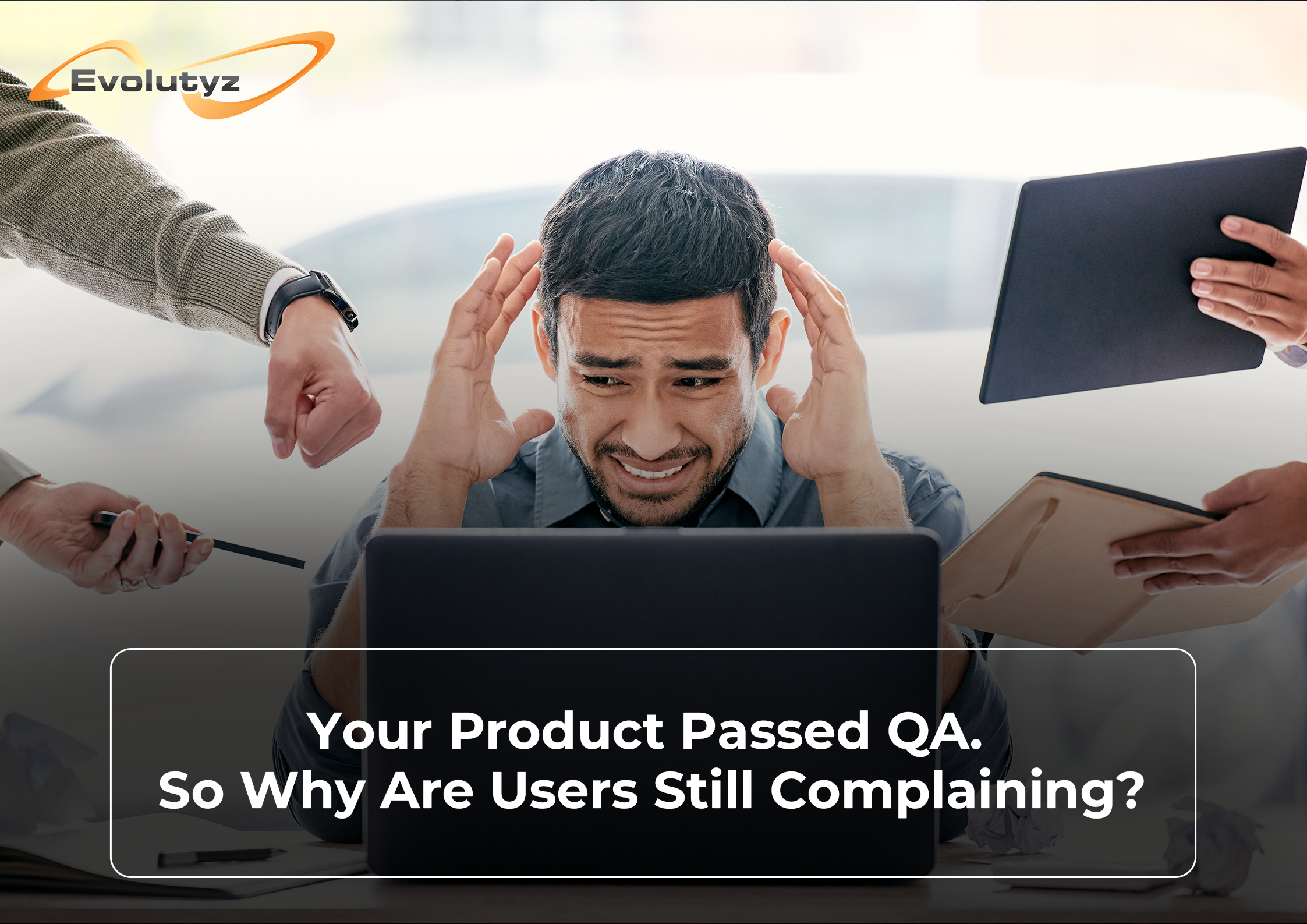
The QA report comes back clean. No critical bugs. No broken flows. Every test case — checked. Every edge case handled. And then users start complaining. Not about bugs. Not about crashes. About confusion. About feeling lost. About clicking through screens wondering what they’re supposed to do next. This is the moment that reveals a truth most teams learn the hard way:
QA and usability are not the same problem.
The Trap of “It Works”
When we say a product “works,” we usually mean it does what it was programmed to do. Click a button the right thing happens. Fill a form, data gets saved. Navigation paths resolve correctly. The system behaves as specified.
That’s QA’s job. And it’s important. Without it, you ship broken software.
But here’s what QA cannot tell you:
- Whether users find the button in the first place
- Whether the form fields make intuitive sense to someone who didn’t build them
- Whether the navigation feels natural or arbitrary
- Whether users leave a screen feeling confident or confused
QA tests your product against your own spec. Users test your product against their mental model of how things should work a mental model you never wrote down, never agreed upon, and in many cases, never considered. The gap between those two things? That’s where the complaints live.
When “No Bugs” Becomes a False Signal
Here’s the dangerous part: a clean QA report can actually increase your confidence right before a bad launch.
The team has been staring at the product for months. Everyone knows where everything is. The logic that felt obvious during design still feels obvious during testing — because the people testing it are the people who built it. They know the intended workflow. They know what the labels mean. They know which button to click because they wrote the copy for it.
This is called the curse of knowledge — and it’s one of the most expensive cognitive biases in software development.
When your internal testers find no usability issues, it doesn’t mean there are none. It means your testers already know how to use the product.
Real users don’t have that knowledge. They come in cold. They come in distracted. They come in with assumptions built from ten other tools they’ve used before. And they’ll make different decisions than your team in nearly every scenario you haven’t explicitly anticipated.
The Three Places Users Get Lost (That QA Never Catches)
1. Terminology That Makes Sense Internally — But Not Externally
Every product develops internal language. Features get named in meetings, those names make it into the UI, and suddenly users are staring at a button called “Initiate Workflow Sequence” when they just want to start a task.
QA will verify that clicking “Initiate Workflow Sequence” does the right thing. It won’t tell you that 70% of users didn’t click it because they weren’t sure what it meant.
The fix isn’t always simplification sometimes a term genuinely has nuance. But the diagnosis requires watching real users, not testing against a spec.
2. Missing Contextual Cues
Users need to feel oriented at every step. They need to know: Where am I? What can I do here? What happens if I do it?
When those cues are missing when a screen has no clear hierarchy, when an action has no visible consequence, when a flow has no progress indicators, users don’t raise their hand and say “I’m confused.” They abandon. Or they do the wrong thing. Or they call support.
QA checks whether your screens load and function. It doesn’t check whether they communicate.
3. Error States That Blame the User
This one is subtle. A well-tested product has error handling. Forms validate. Required fields are flagged. Edge cases are caught.
But who do the errors blame?
“Invalid input” — for what reason? “An error occurred” — what kind? What next? “This field is required” — which field, when you’ve scrolled past it?
Technically correct error handling. Functionally frustrating for users. And every point of friction is a small withdrawal from the trust account your product has with the people who use it.
What Actually Bridges the Gap
This isn’t an argument against QA it’s an argument for building a second discipline alongside it that most teams underinvest in.
Usability testing doesn’t need to be expensive or slow. Watching five users attempt a core workflow will surface more actionable insight than a month of internal review. Not because the users are experts but precisely because they aren’t.
UX research before you build changes the cost equation dramatically. Understanding how users currently solve a problem what language they use, what they expect, where they get frustrated is design input, not decoration.
Feedback loops post-launch aren’t just a support burden. Session recordings, heatmaps, support ticket analysis these are data. Teams that treat them as operational noise miss the signal about what to fix next.
And perhaps most importantly: including someone who represents the user perspective during QA not as a tester of functionality, but as an evaluator of experience catches the category of problems this article is about.
The Mindset Shift That Changes Everything
QA asks: Did we build it right?
UX asks: Did we build the right thing, in the right way, for the right people?
Both questions matter. But for too long, product culture has treated the first as the finish line and the second as a bonus something you layer on if there’s time, budget, and stakeholder appetite. The companies that consistently build products people love have figured out that usability isn’t a phase. It’s not a checklist item after development is done. It’s a continuous investment in understanding the gap between how you think your product works and how users actually experience it.
That gap never fully closes. But the teams who close it most are the ones who don’t mistake a clean QA report for a satisfied user.
A Question Worth Sitting With
Think about the last feature your team shipped. You tested it. It worked. It went live.
Did you watch anyone use it for the first time who wasn’t involved in building it?
If not what do you actually know about the experience you shipped?
At Evolutyz, we help product teams close the gap between technical correctness and genuine usability through UX strategy, research, and experience design that puts real users at the center of what gets built.